
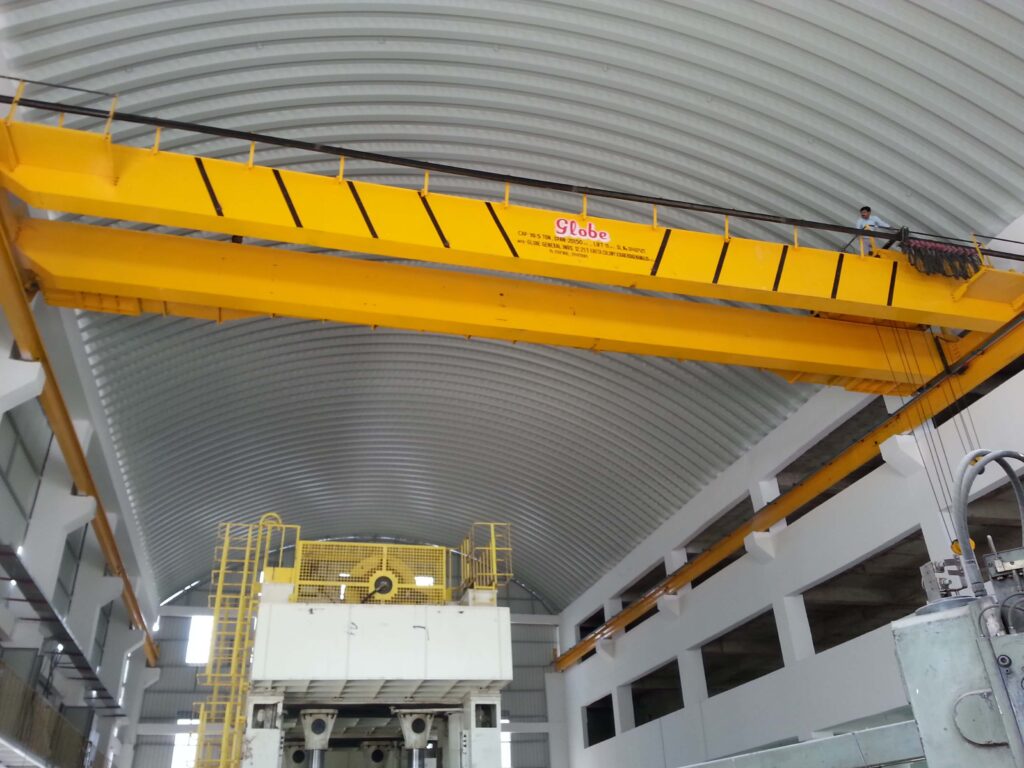
Industries that handle heavy materials every day need reliable lifting equipment to improve workflow, support safe operations, and manage materials efficiently. From manufacturing plants and engineering workshops to warehouses and industrial facilities, overhead cranes play an important role in modern material handling.
Choosing the right crane manufacturer is an important decision because the performance of a crane depends on its design, lifting capacity, installation requirements, operating conditions, and maintenance support.
Businesses looking for an EOT crane manufacturer in Delhi, Haryana, or other parts of India should evaluate their operational requirements before selecting a suitable crane system. Understanding the available crane types and the factors involved in choosing a manufacturer can help businesses make informed decisions.
What Is an EOT Crane?
An Electric Overhead Travelling (EOT) crane is a powered lifting system used to move materials horizontally and vertically within a defined working area. It generally operates on an overhead runway system and uses an electric hoist or lifting mechanism to handle loads.
EOT cranes are commonly used in manufacturing plants, fabrication units, engineering workshops, warehouses, and other industrial facilities where materials must be lifted and moved between workstations.
Depending on the application, businesses can select different crane configurations based on load capacity, building structure, available headroom, span, and operating frequency.
Why Choose the Right EOT Crane Manufacturer?
Comparing product prices is only one aspect of choosing an appropriate manufacturer. The crane must match the facility’s layout, material-handling requirements, and expected operating conditions.
Here are some important factors to consider:
1. Crane Design and Engineering
The manufacturer should understand the application and recommend a crane configuration that meets the required lifting capacity, span, lifting height, and operating conditions. Proper engineering helps ensure that the crane is suitable for its intended use.
2. Lifting Capacity and Performance
Different industrial operations require different lifting capacities. Before selecting a crane, determine the maximum load, frequency of lifting, travel distance, and expected operating duty.
These details help identify the appropriate crane configuration for the facility.
3. Manufacturing Quality
Consider the materials, fabrication quality, electrical components, lifting mechanism, and inspection procedures used in the manufacturing process. Applicable design and safety standards should be verified for the specific crane and application.
4. Installation and After-Sales Support
Installation planning, commissioning, maintenance, and access to replacement components are important considerations when selecting an industrial crane supplier. Businesses may reduce preventable operating disruptions and arrange maintenance with the aid of dependable support.
EOT Crane Manufacturer in Delhi: Solutions for Industrial Operations
Delhi has a diverse industrial and commercial landscape, including engineering workshops, manufacturing businesses, fabrication units, and warehouses. These facilities may require overhead lifting equipment for handling raw materials, components, machinery, and finished products.
Businesses searching for an EOT crane manufacturer in Delhi should assess the available installation space, runway arrangement, building structure, lifting requirements, and frequency of operation.
Single girder EOT cranes can be suitable for applications where their capacity, span, headroom, and duty rating meet the project’s requirements. A technical evaluation should be the basis for the ultimate decision rather than just location or cost.
When comparing manufacturers, ask for product specifications, relevant technical documentation, installation requirements, and information about available maintenance support.
EOT Crane Manufacturer in Haryana: Supporting Manufacturing and Industrial Facilities
Haryana has industrial and manufacturing activity across sectors such as automotive, engineering, fabrication, and warehousing. Many of these operations require dependable equipment to move materials between production, storage, and dispatch areas.
An EOT crane manufacturer in Haryana should be evaluated on its ability to understand the facility’s lifting requirements and recommend an appropriate crane system.
Before finalizing a crane, consider:
- The maximum working load and lifting height.
- The required crane span and runway length.
- The available headroom and building clearance.
- The frequency and intensity of crane operations.
- The electrical supply and operating environment.
- Installation, inspection, and maintenance requirements.
A properly selected crane can support efficient material movement while helping the facility meet its applicable safety and operational requirements.
Crane Manufacturer in Delhi: What Should Businesses Look For?
Businesses searching for a crane manufacturer in Delhi should compare manufacturers according to the type of equipment they require, their technical capabilities, and the support available throughout the equipment’s service life.
A suitable manufacturer should be able to explain the differences between available crane configurations and provide clear technical specifications for the proposed system.
Before making a decision, review the manufacturer’s product range, load capacity options, documentation, relevant standards, and service arrangements.
It is also helpful to share the facility layout and application details with the manufacturer. This allows the proposed crane configuration to be evaluated against the actual operating requirements.
Crane Manufacturer in Haryana: Choosing Equipment for Your Application
Industrial businesses looking for a crane manufacturer in Haryana may need equipment for production lines, fabrication workshops, storage facilities, or machinery-handling operations.
The right crane depends on the work being performed. For example, a workshop handling lighter loads may have different requirements from a facility moving large components throughout the working day.
When evaluating a crane manufacturer, businesses should focus on:
- Application-specific crane design.
- Suitable lifting capacity and operating duty.
- Structural and runway compatibility.
- Electrical and control system requirements.
- Safety features and operating procedures.
- Availability of technical assistance and maintenance.
A clear understanding of these factors helps businesses compare suitable crane solutions and avoid selecting equipment that does not meet their needs.
Crane Manufacturer in India: Finding the Right Industrial Crane Solution
Businesses across India operate in a wide range of industrial environments, each with its own material-handling challenges. Selecting a crane manufacturer in India requires evaluating the equipment range, engineering capabilities, manufacturing processes, and support arrangements relevant to the project.
A manufacturer serving industrial customers should be able to provide clear information about crane specifications and help identify a suitable configuration for the intended application.
When evaluating manufacturers, consider the following:
Product range: Check whether the manufacturer offers the crane type required for your application.
Technical specifications: Review lifting capacity, span, lifting height, travel speeds, and duty classification.
Standards and documentation: Confirm the applicable design standards, inspection requirements, and compliance documentation for the proposed equipment.
Project requirements: Consider the installation environment, building structure, operating conditions, and integration with existing equipment.
Service support: Understand the arrangements for installation, commissioning, preventive maintenance, and technical assistance.
These considerations are useful whether a business is procuring a new crane system or planning to upgrade an existing material-handling setup.
Understanding Single Girder EOT Cranes
One main bridge girder is used to support the lifting mechanism in single girder EOT cranes, which are overhead lifting systems. They are frequently taken into consideration in industrial settings where a single-girder structure is suitable given the necessary capacity, span, and operational duty.
Potential applications include manufacturing units, workshops, assembly areas, and warehouses.
Before choosing a single girder EOT crane, businesses should evaluate:
- Required lifting capacity and lifting height.
- Building dimensions and available headroom.
- Crane span and runway arrangement.
- Hoist type and travel requirements.
- Operating frequency and duty classification.
- Applicable design, installation, and safety requirements.
The suitability of a single girder design depends on the specific project. A qualified technical assessment can help determine whether it is the right option.
For product specifications and further details, explore Globe’s Single Girder EOT Crane page.
Why Consider Globe for Industrial Crane Requirements?
Globe General Industries provides industrial crane and material-handling equipment for a variety of applications. Businesses evaluating crane solutions can review the available products and discuss their project requirements before choosing a suitable configuration.
When assessing a crane for your facility, provide details about the load, span, lifting height, operating conditions, and installation location. These details help establish the technical requirements for selecting an appropriate crane.
You can also explore Globe’s crane manufacturer and supplier product category to learn more about its crane-related offerings.
For project-specific requirements, request technical information and confirm the applicable specifications, manufacturing standards, delivery arrangements, and service support before placing an order.
Frequently Asked Questions
1. How do I choose an EOT crane manufacturer in Delhi?
Compare manufacturers based on their product range, engineering capabilities, technical documentation, applicable standards, installation requirements, and after-sales support. Before getting a quote, let us know your lifting capacity, span, and operational needs.
2. What should I consider when selecting an EOT crane manufacturer in Haryana?
Consider the type of industrial application, maximum load, lifting height, runway arrangement, operating frequency, building structure, and maintenance requirements. The selected manufacturer should be able to provide specifications appropriate to your application.
3. How can I find a suitable crane manufacturer in India?
Review the manufacturer’s experience relevant to your application, available crane configurations, technical specifications, quality processes, documentation, and service arrangements. Compare proposals against your actual project requirements rather than price alone.
4. What is the difference between a single girder and a double girder EOT crane?
One primary bridge girder is used by a single girder EOT crane, whilst two are used by a double girder EOT crane. Lifting capacity, span, lifting height, headroom, workload requirements, and the layout of the facility all influence the proper configuration.
5. Which industries use EOT cranes?
EOT cranes are used in manufacturing, engineering, fabrication, automotive production, warehousing, and other industrial environments where overhead lifting and material movement are required.
6. What information is needed to request an EOT crane quotation?
Provide the required lifting capacity, span, lifting height, runway details, operating frequency, intended application, installation location, and any relevant building drawings. The manufacturer may request additional technical information before recommending a suitable configuration.
Conclusion
Choosing the right crane manufacturer requires careful consideration of technical requirements, manufacturing quality, safety, installation, and long-term maintenance. Businesses searching for an EOT crane manufacturer in Delhi, Haryana, or elsewhere in India should evaluate their application before comparing available solutions.
By assessing these factors, businesses can make a more informed decision about the crane system best suited to their facility.
Explore Globe’s Single Girder EOT Crane solutions to review product information and discuss your industrial material-handling requirements.